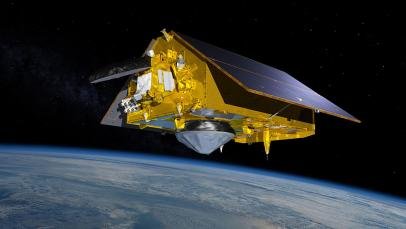
Imagine standing under a crisp night sky in the remote deserts of New Mexico, telescope in hand, chasing the faint glow of distant galaxies. That’s what I did a few summers ago with an old college buddy who’s an amateur astronomer. We drove hours away from city lights, set up our gear, and waited for the stars to emerge. But as the evening deepened, what should have been a serene canvas of constellations turned into a light show of streaking satellites zipping across our view. My friend cursed under his breath, explaining how these weren’t shooting stars but man-made intruders from projects like Starlink. That night stuck with me—not just for the frustration but for the realization that our quest for worldwide connectivity comes with a hidden price tag on the heavens themselves. In this article, we’ll dive deep into how global satellite internet is reshaping astronomy, often for the worse, blending the excitement of tech progress with the sobering toll on scientific discovery.
Understanding Global Satellite Internet
Global satellite internet promises high-speed connectivity to the most isolated corners of Earth, beaming data from orbiting fleets to ground receivers. Unlike traditional cable or fiber, it relies on low-Earth orbit (LEO) satellites that circle the planet quickly, reducing lag and enabling services in rural or oceanic areas. But this convenience scales up rapidly, with thousands of satellites already launched and tens of thousands more planned, creating a web that’s both revolutionary and disruptive.
The Boom in Satellite Mega-Constellations
The surge in mega-constellations stems from companies racing to dominate the broadband market, driven by falling launch costs and growing demand for seamless online access. These networks, often numbering in the thousands, orbit at altitudes around 550 kilometers, far lower than older geostationary satellites, allowing for faster data transfer but also more visibility from the ground. As a result, the night sky is becoming busier, with implications that extend beyond casual stargazing into professional research fields.
Starlink: The Front-Runner in Space-Based Internet
SpaceX’s Starlink leads the pack with over 8,000 satellites in orbit as of mid-2025, aiming for 42,000 to blanket the globe in reliable internet. Launched in batches via Falcon 9 rockets, these flat-panel birds reflect sunlight, appearing as bright trains during twilight hours. While they’ve connected millions in underserved regions, their sheer volume has sparked debates among scientists about long-term sustainability.
Emerging Competitors: OneWeb, Amazon’s Kuiper, and More
Beyond Starlink, players like OneWeb (now under Eutelsat) and Amazon’s Project Kuiper are deploying their own constellations, each with thousands of units planned. OneWeb focuses on enterprise and government needs, while Kuiper emphasizes integration with Amazon’s ecosystem for global coverage. These additions compound the orbital clutter, raising questions about equitable space use and shared skies.
The Hidden Toll on Astronomical Observations
Astronomy thrives on pristine, dark skies free from interference, but satellite swarms introduce artificial brightness and signals that contaminate data. Telescopes capturing long-exposure images often end up with unwanted streaks, forcing researchers to discard valuable hours of work. This “cost” isn’t just financial—it’s a loss of irreplaceable insights into the universe’s mysteries, from exoplanets to cosmic events.
Visual Disruptions: Satellites as Night Sky Invaders
Satellites reflect sunlight, creating visible trails that ruin wide-field surveys, especially during dawn and dusk when they’re most illuminated. Ground-based observatories like the Vera C. Rubin Observatory report up to 18% of twilight images affected by 2021, a figure that’s climbed with more launches. It’s like trying to read a book while someone flashes a light in your eyes—frustrating and inefficient.
- Streaks in Images: Long exposures capture satellite paths as bright lines, obscuring faint celestial objects.
- Increased Sky Brightness: Collective reflections make the background sky glow, reducing contrast for dim stars and galaxies.
- Impact on Surveys: Projects like the Legacy Survey of Space and Time lose data integrity, delaying discoveries.
Radio Interference: Silent Noise in the Spectrum
Beyond visible light, satellites emit unintended radio waves from their electronics, overlapping with frequencies used by radio telescopes to probe the cosmos. Studies show Starlink’s signals in the 110-188 MHz range drowning out weak astronomical emissions, affecting tools like the Square Kilometre Array (SKA). This electromagnetic clutter is akin to shouting in a library—essential whispers from space get lost.
- Frequency Overlap: Broadband emissions leak into protected bands, blinding sensitive instruments.
- Global Reach: With constellations everywhere, no observatory is immune, from Australia to the Netherlands.
- Cumulative Effect: As numbers grow, interference intensifies, potentially halting certain research avenues.
Comparing Satellite Internet Providers’ Impact
When stacking up providers, Starlink’s dominance means it bears the brunt of scrutiny, but others aren’t far behind. Here’s a table breaking down key players:
| Provider | Satellites in Orbit (2025) | Planned Total | Known Mitigation Efforts | Reported Astronomy Impact |
|---|---|---|---|---|
| Starlink | ~8,000 | 42,000 | Dark coatings, sunshades | High: Visual streaks, radio leaks |
| OneWeb | ~650 | 7,000 | Altitude adjustments | Moderate: Emerging radio concerns |
| Kuiper | Testing phase | 3,200 | Reflective minimization | Low (so far): Potential visual issues |
| GuoWang | Early stages | 13,000 | Limited public info | Unknown: Anticipated high due to scale |
This comparison highlights how scale amplifies problems—bigger fleets equal bigger headaches for astronomers.
Pros and Cons: Balancing Connectivity and Cosmos
Global satellite internet isn’t all doom for the stars; it has upsides, but the downsides hit hard.
Pros:
- Bridges digital divides in remote areas, empowering education and economies.
- Enables real-time disaster response with reliable comms.
- Drives tech innovations that could eventually benefit space science.
Cons:
- Permanent alteration of night skies, eroding cultural heritage of stargazing.
- Data loss in astronomy, stalling breakthroughs in understanding black holes or alien worlds.
- Environmental ripple effects, like increased space debris risks.
Humor me for a second: It’s ironic that satellites meant to connect us on Earth are disconnecting us from the universe—talk about cosmic bad timing.
Mitigation Strategies: Can We Have It All?
Efforts to soften the blow include satellite design tweaks and policy pushes. SpaceX has rolled out “visors” to block reflections and darker paints, cutting brightness by up to 55%. Collaborations like NRAO’s with SpaceX aim at spectrum sharing, allowing telescopes to dodge active satellite beams. Yet, with launches outpacing fixes, astronomers advocate for international regulations to cap constellations and enforce darker orbits.
Technological Fixes on the Horizon
Innovations like AI software to edit out satellite trails from images offer short-term relief for visual astronomy. Radio-wise, dynamic frequency allocation lets satellites quiet down over observatories. These steps show promise, but they require industry buy-in to scale effectively.
Policy and Advocacy: Pushing for Darker Skies
Groups like the International Astronomical Union (IAU) push for “dark and quiet skies” protections, coordinating with the UN on orbital guidelines. Public campaigns rally support, emphasizing that preserving the night sky benefits everyone—from scientists to backyard enthusiasts. For more on advocacy, check the IAU’s Centre for the Protection of the Dark and Quiet Sky (external link: https://cps.iau.org/).
Where to Learn More: Navigational Resources
If you’re keen to dive deeper, start with official sites like the European Southern Observatory (ESO) for reports on satellite impacts (external link: https://www.eso.org/public/). For tools, explore satellite trackers like Jonathan McDowell’s site to monitor orbits in real-time. Internal link: Our guide on “Best Astronomy Apps for Satellite Avoidance” can help amateurs plan sessions.
Best Tools for Mitigating Astronomy Disruptions
For astronomers battling interference, software like TrailMask removes streaks from data, while hardware upgrades to shielded receivers combat radio noise. Transactional tip: Invest in observatories’ crowdfunding for adaptive tech—platforms like Patreon support projects at places like the Low-Frequency Array (LOFAR). These tools aren’t perfect but make a tangible difference in preserving observations.
People Also Ask: Addressing Common Queries
Drawing from real Google searches, here’s a breakdown of frequent questions on this topic.
- Are internet satellites a threat to astronomy? Absolutely, as mega-constellations like Starlink create light pollution and radio interference, potentially derailing key research.
- How do Starlink satellites affect astronomy? They streak across telescope views and emit unintended signals, blinding radio observations and ruining up to 20% of images in some surveys.
- What is the environmental impact of satellite internet? Beyond astronomy, it includes orbital debris risks and atmospheric pollution from reentries, urging sustainable practices.
- Can astronomers and satellite companies coexist? Yes, through collaborations like spectrum-sharing systems, but it demands ongoing dialogue and tech adaptations.
FAQ: Answering Your Burning Questions
What exactly is satellite mega-constellation light pollution?
It’s the artificial brightness from satellites reflecting sunlight, making them visible and disruptive to telescopes. This LSI term ties into broader night sky degradation, affecting both optical and infrared observations.
How can individuals help protect astronomy from satellite interference?
Support dark sky initiatives, sign petitions for regulations, and choose ethical internet providers. Simple actions like reducing personal light pollution at home amplify the cause.
Is there a way to track satellites to avoid them during stargazing?
Yes, apps like Heavens-Above or Star Walk predict passes. For pros, optimized scheduling around orbital patterns minimizes conflicts.
What are the long-term costs to science from this issue?
Delayed discoveries, like in exoplanet hunting or cosmic microwave background studies, could set back our understanding of the universe by years, with economic ripple effects on research funding.
Are there alternatives to satellite internet that don’t harm astronomy?
Ground-based fiber expansions or balloon tech like Google’s Loon (now defunct) offer less invasive options, though they’re not yet global.
In wrapping up, that night in the desert with my friend wasn’t just about missed stars—it was a wake-up call to the delicate balance between human ambition and the natural world. Global satellite internet unlocks doors for billions, but at what expense to our shared cosmic heritage? As constellations grow, so must our commitment to solutions. It’s not about halting progress but steering it wisely. If we act now, perhaps future stargazers won’t have to choose between connectivity and the cosmos. For related reads, explore our piece on “Sustainable Space Tech Innovations” (internal link). And remember, the universe has been patient with us—let’s return the favor.